Project
Quarkus AdTech Demo
A benchmark-oriented RTB demo that compares Quarkus native against other receiver implementations under the latency and startup constraints that matter in AdTech.
Proof
- README documents startup and throughput claims instead of vague “fast” language.
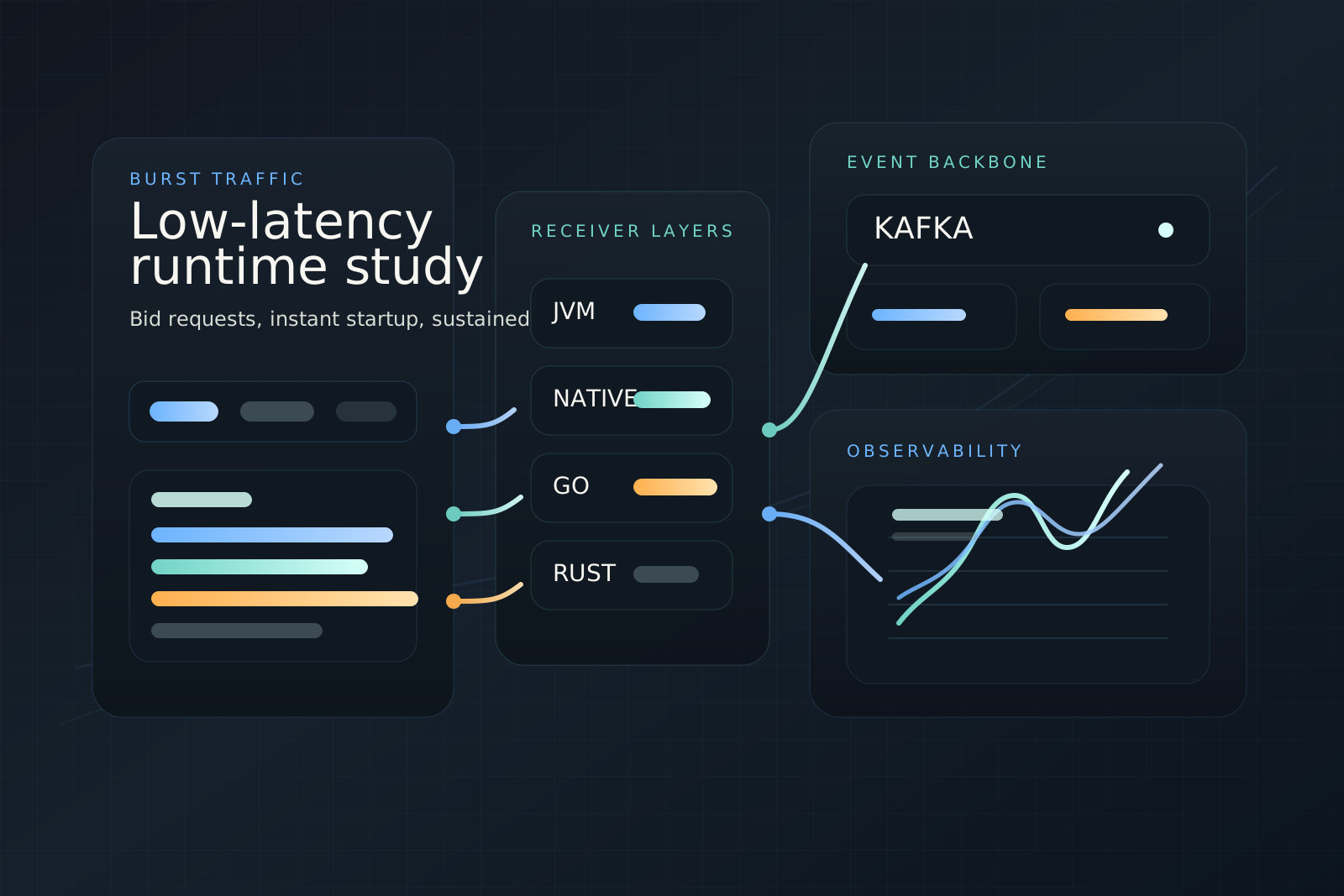
- Includes JVM, native, Go, and Rust receiver variants in the same benchmark story.
- Ships observability and Kubernetes deployment assets alongside the code.
For
- JVM engineers evaluating native images under real load
- Platform teams comparing language and runtime tradeoffs
- AdTech and high-throughput backend engineers
Stack
- Quarkus Native
- Kafka
- PostgreSQL
- Prometheus
- Grafana
- Helm
What it is
This project frames a very specific engineering question: when the workload is bursty, latency sensitive, and horizontally scaled, how far can modern Java go before another runtime is the better tool?
Why it matters
Most runtime comparisons are too abstract to be useful. They compare hello-world startup times or microbenchmarks with no operational story behind them. Here the scenario is concrete: a bid receiver for Real-Time Bidding traffic, with Kafka ingestion, observability, and deployment paths that look like a real system instead of a slide.
What makes it credible
The project is interesting because it does not rely on a single flattering number. It brings together:
- startup and throughput claims,
- side-by-side implementations,
- load-test setup,
- observability tooling,
- a Helm deployment path.
That is the kind of material that lets an article make a defensible argument instead of a rhetorical one.
How it connects to the writing
The companion article on Quarkus native versus Go argues that the “Java is too slow/heavy” story is now incomplete. This project is the proof layer behind that claim, especially for teams that need to see concrete receiver architecture and benchmark framing before they take the argument seriously.