Project
MCP ZAP Server
Secure OWASP ZAP scanning exposed as an MCP server for AI agents, with real deployment paths, documentation, and production-oriented auth.
Proof
- 37 GitHub stars and 5 forks as of March 9, 2026.
- Separate docs site, release notes, and demo flow instead of a README-only repo.
- Supports API-key and JWT authentication modes plus URL validation and scan limits.
For
- AppSec teams that want AI-assisted scanning workflows
- Platform engineers integrating security checks into developer tooling
- Teams evaluating MCP beyond toy demos
Stack
- Java 25
- Spring Boot 4
- MCP
- OWASP ZAP
- Docker Compose
- Helm
What it is
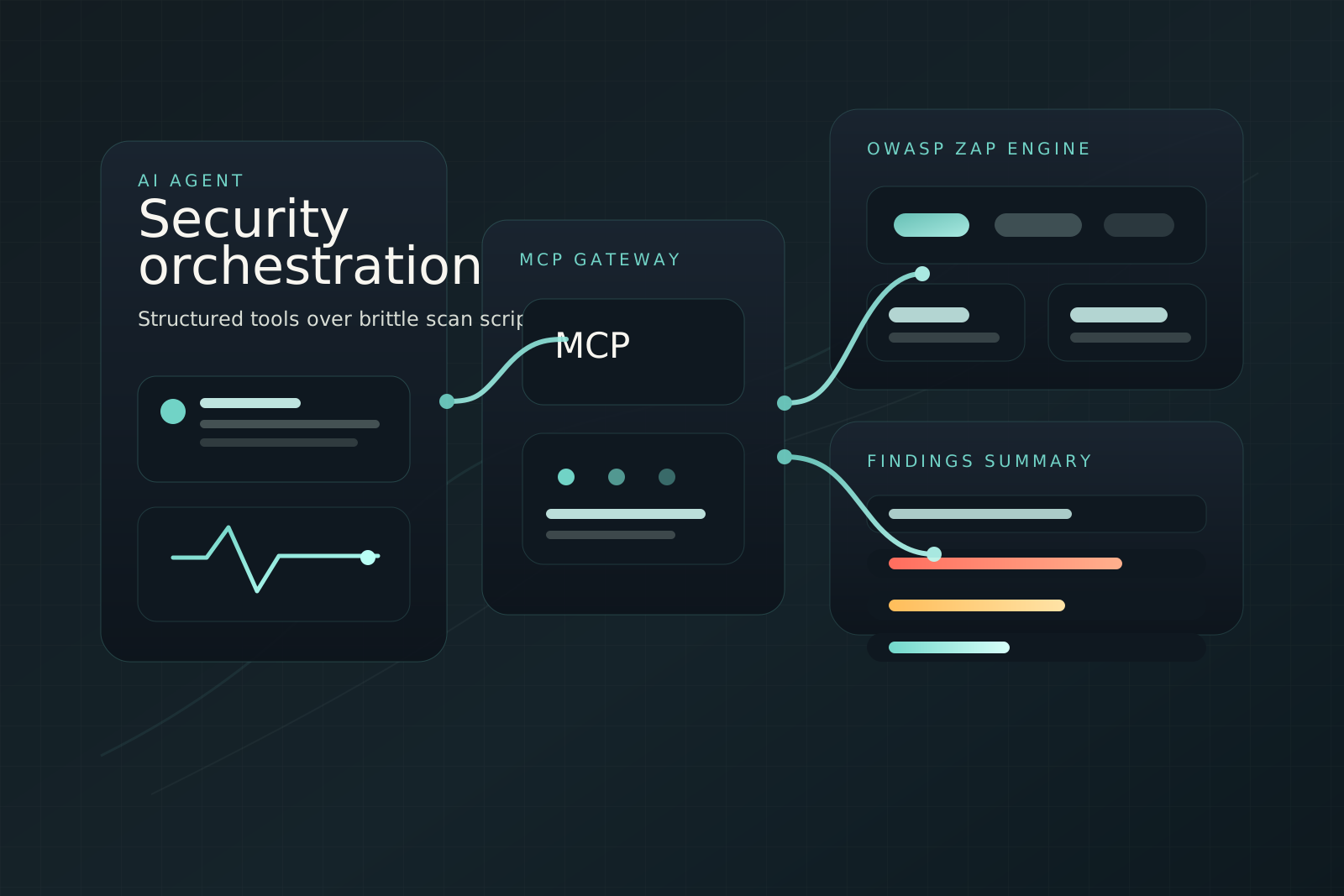
This project turns OWASP ZAP into an MCP-accessible tool so an AI agent can drive scanning, import OpenAPI specs, and pull structured findings without falling back to brittle shell scripts.
Why it matters
Many MCP demos stop at convenience. This one is stronger because it sits on a real operational seam: security automation. The interesting question is not whether an agent can call a tool. It is whether that tool can be exposed in a way that is safe enough, observable enough, and packaged well enough to fit into actual engineering workflows.
What makes it credible
The repository has enough surface area to show that it has moved past novelty:
- a documentation site with security and deployment guides,
- a demo path that shows the workflow end to end,
- release notes and changelog discipline,
- deployment material for containerized and Kubernetes-based setups.
That combination is exactly why it deserves a page here. The repository handles setup and usage. This page explains why the project matters in the first place.
How it connects to the writing
This is the practical counterpart to the argument in MCP: the USB-C of AI integrations. The article explains why a common integration layer matters. The project shows what that looks like when the tool on the other side has real security and operational constraints.